Tag: Ultimate
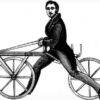
History of early bicycles
The bicycle was introduced in the 19th century in Europe by German Inventor Karl von Drais. He is credited with developing the first bicycle. He introduced it to the people in Paris in 1818. It is supposed to originate from the human-powered vehicle called Draisines. Drais invented a walking machine that would help him get around the royal gardens faster. It was known by many names, including the “velocipede,” “dandy horse,” “hobby-horse,” “draisine” and “running machine. It had no pedals and its frame was a wooden beam. It had two same-size in-line wheels with the front one steerable and mounted in a frame which was straddled. In 1839, Kirkpatrick MacMillan, a Scottish blacksmith, allegedly completed construction of a pedal driven…

From Aero to Zoom: The Ultimate Cycling Glossary
Welcome to our comprehensive guide to cycling terms! Whether you’re a seasoned cyclist or just starting out on your biking journey, understanding the terminology is key to fully immerse yourself in the world of cycling. From components and techniques to race tactics and equipment, this glossary covers a wide range of terms to help you navigate the cycling landscape with confidence. Whether you’re curious about the difference between a ‘quill stem’ and an ‘aero bar’ or want to learn more about the intricacies of ‘cadence’ and ‘drafting,’ you’ll find everything you need right here. So, saddle up and let’s dive into the fascinating language of cycling. A, B, C, D, E, F, G, H, I, J, K, L, M, N,…

Bike Pedals for Commuting [The Ultimate Pedal Guide]
Pedals are vital for stable and comfortable cycling. They’re one of the three contact points between rider and bike. Their purpose is to transfer the power created by the rider’s legs. Commuters and sports cyclists have different requirements from their pedals. Road racers and mountain bikers rely on being able to guarantee a fixed foot position, to stomp down consistent power. They also need quick release mechanisms. Commuters don’t need these features. How Do Bike Pedals Work? Bike pedals convert power to move the bicycle. You’d have to run with the bike underneath you if you didn’t have them. They’re fixed to one end of cranks, and work together with a chain and gearing to propel you. You place your…