Tag: ShaftDriven
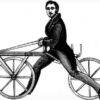
History of early bicycles
The bicycle was introduced in the 19th century in Europe by German Inventor Karl von Drais. He is credited with developing the first bicycle. He introduced it to the people in Paris in 1818. It is supposed to originate from the human-powered vehicle called Draisines. Drais invented a walking machine that would help him get around the royal gardens faster. It was known by many names, including the “velocipede,” “dandy horse,” “hobby-horse,” “draisine” and “running machine. It had no pedals and its frame was a wooden beam. It had two same-size in-line wheels with the front one steerable and mounted in a frame which was straddled. In 1839, Kirkpatrick MacMillan, a Scottish blacksmith, allegedly completed construction of a pedal driven…

Chainless Bikes: How Shaft-Driven Bicycles Work
Chainless bikes are not a new innovation. The first machines to resemble what we recognise as bicycles were propelled by a rider’s legs, but it didn’t take long to find an engineered alternative to human power. Solutions and tinkering from pioneering inventors turned to existing industrial and mechanical methods of turning gears. This ingenuity brought the shaft-drive system to the bicycle. Although many inventors received patents, commercial development of the system was eventually stopped by the efficiency and relative low cost of the chain drive system. The arrival of the derailleur in between the two world wars brought standardisation and utility to the world of cycling, coinciding with mass production. The chain drive system, even though not universal, was here…