Tag: People
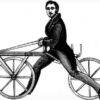
History of early bicycles
The bicycle was introduced in the 19th century in Europe by German Inventor Karl von Drais. He is credited with developing the first bicycle. He introduced it to the people in Paris in 1818. It is supposed to originate from the human-powered vehicle called Draisines. Drais invented a walking machine that would help him get around the royal gardens faster. It was known by many names, including the “velocipede,” “dandy horse,” “hobby-horse,” “draisine” and “running machine. It had no pedals and its frame was a wooden beam. It had two same-size in-line wheels with the front one steerable and mounted in a frame which was straddled. In 1839, Kirkpatrick MacMillan, a Scottish blacksmith, allegedly completed construction of a pedal driven…

We Asked 200+ People WHY They Cycle And The Truth Surprised Us
Have you ever wondered why people actually ride a bicycle? No? Oh. Well, I have. So I asked our audience on Facebook, why they choose to ride a bicycle and over 200 people responded. The responses were incredible. It was a real insight into how people navigate their own challenges and journeys through life. I then analyzed the responses, grouped them into categories (e.g., health, money, etc.), and ranked them by the most popular. This is what we found: 1. “So I Can Eat More Cake” Cycling for exercise and health stands out as a predominant reason many choose to ride, reflecting a universal recognition of its extensive benefits. Riding a bicycle is not only a low-impact activity that can…

Bikes for Disabled People: 7 Cycles for Different Disabilities
According to the World Health Organisation, “an estimated 1.3 billion people experience significant disability. This represents 16% of the world’s population, or 1 in 6 of us.” They also state that, “persons with disabilities find inaccessible and unaffordable transportation 15 times more difficult than for those without disabilities.” At Discerning Cyclist, we are keen advocates of cycling for transport and riding in style. For some Disabled people like myself cycling is much easier than walking, or using public transport. So in this article we’ll be exploring how and why cycling can play an invaluable role in empowering and enabling Disabled people to ride from A to B, whether it’s for a workout, work or wellbeing. Can Disabled People Cycle? It…