Tag: ScienceBacked
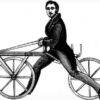
History of early bicycles
The bicycle was introduced in the 19th century in Europe by German Inventor Karl von Drais. He is credited with developing the first bicycle. He introduced it to the people in Paris in 1818. It is supposed to originate from the human-powered vehicle called Draisines. Drais invented a walking machine that would help him get around the royal gardens faster. It was known by many names, including the “velocipede,” “dandy horse,” “hobby-horse,” “draisine” and “running machine. It had no pedals and its frame was a wooden beam. It had two same-size in-line wheels with the front one steerable and mounted in a frame which was straddled. In 1839, Kirkpatrick MacMillan, a Scottish blacksmith, allegedly completed construction of a pedal driven…

Hyperhydration for Cyclists: Science-Backed Strategy to Boost Performance in the Heat
Dehydration is one of the biggest threats to peak cycling performanceespecially in hot and humid conditions. But what if you could delay its effects before your ride even begins? Enter hyperhydration: a science-backed strategy designed to increase your bodys fluid reserves before you hit the saddle. By combining sodium, glycerol, or both, hyperhydration can expand plasma volume, reduce core temperature, and extend endurance. Whether you’re training in extreme heat or racing without frequent access to fluids, this technique could be the performance edge youve been missing.We all know the negative impact that being dehydrated can have on performance. If dehydration is bad, then one potential may be to start hyperhydrated to delay dehydration? Here’s a closer look at the science,…