Tag: Interpreting
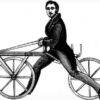
History of early bicycles
The bicycle was introduced in the 19th century in Europe by German Inventor Karl von Drais. He is credited with developing the first bicycle. He introduced it to the people in Paris in 1818. It is supposed to originate from the human-powered vehicle called Draisines. Drais invented a walking machine that would help him get around the royal gardens faster. It was known by many names, including the “velocipede,” “dandy horse,” “hobby-horse,” “draisine” and “running machine. It had no pedals and its frame was a wooden beam. It had two same-size in-line wheels with the front one steerable and mounted in a frame which was straddled. In 1839, Kirkpatrick MacMillan, a Scottish blacksmith, allegedly completed construction of a pedal driven…

Interpreting Sport Science: Why Pro Training Might Not Work for You
Every cyclist wants to improve, and with so much sport science research available, its tempting to apply every new finding to your training. But are pro-level insights always relevant to amateur riders? Understanding how to interpret scientific studiesand knowing what actually applies to youcan make a huge difference in your performance. In this article, well break down how to sift through the data and train smarter, not just harder.Who is driving sport science? Should elite pros be adopting the latest scientific findings? And should we as everyday athletes be trying to emulate what the pros are doing?Every month, it seems another major innovation in training science or nutrition is upon us. Weve seen big bold claims about nitrate supplementation, polarized…